Iranian Missile Attacks Fail as US Strikes Five Iranian Oil Tankers
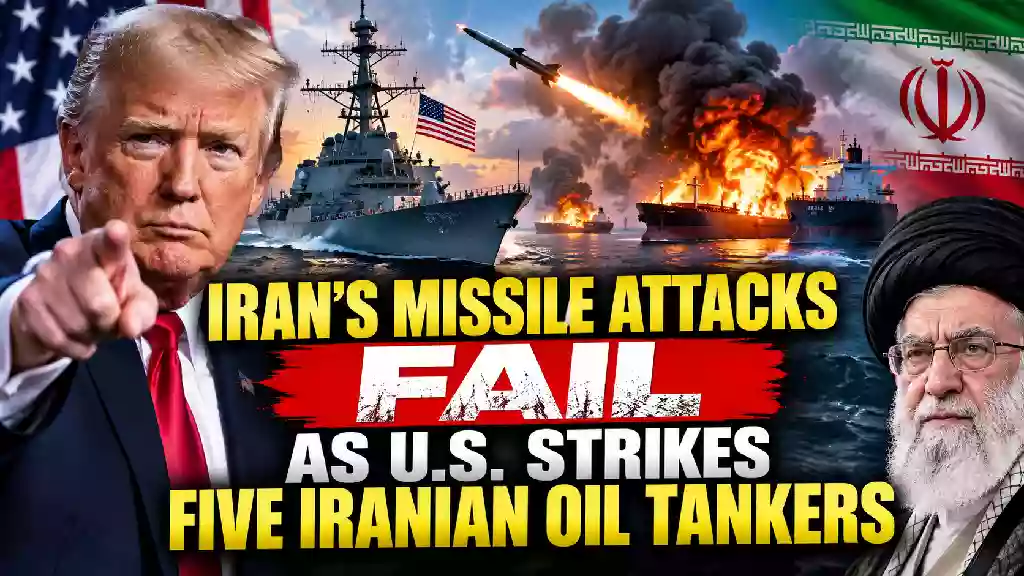
U.S. forces strike five Iranian oil tankers after Iranian missile attacks on a U.S. Navy warship reportedly fail, escalating tensions between Washington and Tehran.
Iranian Missile Attacks Fail as US Strikes Five Iranian Oil Tankers
US Strikes Five Iranian Oil Tankers After Failed Missile Attacks on Navy Warship
The U.S.-Iran conflict has entered another dangerous phase after the Islamic Revolutionary Guard Corps attempted to strike a U.S. Navy warship with ballistic missiles, prompting American forces to destroy five Iranian crude-oil carriers, according to U.S. Central Command.
CENTCOM said the American warship successfully evaded two Iranian missile attacks over two days and continued operating in regional waters. No American personnel were harmed, according to the U.S. military.
The American response then shifted toward Iran’s oil network, with five crude carriers targeted in the Gulf of Oman and near Kharg Island. The strikes highlight the growing connection between military confrontation and Iran’s ability to generate revenue through oil exports.
Iranian Missile Attacks Fail to Hit U.S. Warship
According to CENTCOM, the IRGC attempted to attack a U.S. Navy warship with ballistic missiles twice over the previous two days.
The American vessel successfully evaded both attacks and continued patrolling regional waters. CENTCOM said there were no American casualties.
The failed attacks came after an earlier confrontation on September 5, when Iranian forces attempted to attack a U.S. aircraft carrier and guided-missile destroyer. CENTCOM said those attacks also failed.
The latest incidents demonstrate how quickly the confrontation can escalate when Iranian missile attacks are followed by American strikes against Iranian economic assets.
U.S. Destroys Five Iranian Oil Carriers
Following the latest missile attacks, CENTCOM said U.S. forces destroyed five Iranian crude-oil carriers.
Four of the vessels — Kaviz, Charminar, Horizon 1 and Riesco — were struck in the Gulf of Oman. A fifth vessel, Derya, was targeted near Kharg Island.
CENTCOM said American forces directed the crews to abandon the vessels before the ships were struck and rendered inoperable.
The U.S. military described the tankers as part of an Iranian shadow network allegedly used to generate revenue for the IRGC and its regional proxies.
The strikes followed three additional tanker destructions announced by CENTCOM on September 5, bringing the number of Iranian crude carriers reported destroyed by U.S. forces in those two operations to eight.
Kharg Island Becomes a Major Strategic Flashpoint
One of the latest tanker strikes occurred near Kharg Island, a critical center of Iran’s oil-export infrastructure.
The island is strategically important because of its role in Iran’s crude-oil exports. Any disruption around the area could have consequences beyond the battlefield by affecting international oil supplies and energy markets.
The latest strikes therefore carry both military and economic significance. Targeting vessels connected to Iran’s oil trade puts additional pressure on Tehran while demonstrating that attacks against U.S. naval forces could trigger responses against economically important Iranian assets.
Iran Retaliates With Missile Attack Toward Jordan
The confrontation did not end with the tanker strikes.
Iran subsequently launched ballistic missiles toward U.S. targets in Jordan, according to Iranian state media and the Islamic Revolutionary Guard Corps.
Jordan’s military said its air defenses intercepted 18 of 20 ballistic missiles, while two missiles landed in unpopulated areas. Jordan reported no casualties from the attack.
The exchange illustrates the expanding geographic scope of the conflict, with military operations involving U.S. forces, Iran and regional allies and proxies.
Oil Prices Surge as Middle East Tensions Intensify
The military escalation is also creating fresh concerns in global energy markets.
Brent crude moved sharply higher as investors assessed the risk of further disruptions to oil supplies and shipping routes. The benchmark approached and then moved above $100 per barrel, according to financial-market reporting.
The Strait of Hormuz remains a major concern. The waterway is one of the world’s most important energy-shipping routes, meaning prolonged disruption could affect crude supplies, transportation costs and gasoline prices around the world.
The renewed violence comes after a period of relative calm between Washington and Tehran, making the latest escalation particularly significant for energy traders and governments monitoring global supply risks.
U.S. Pressure on Iran’s Oil Network Intensifies
The tanker strikes represent more than a battlefield response.
Iran relies heavily on oil exports to generate revenue, while Washington has sought to restrict Tehran’s ability to use its oil trade to support military operations and the IRGC.
By targeting crude carriers connected by CENTCOM to Iran’s shadow oil network, the United States is applying pressure to an important source of Iranian revenue.
The strategy also sends a broader message: attacks on U.S. naval forces could result in additional economic consequences for Iran.
A Dangerous New Phase in the U.S.-Iran Conflict
The latest confrontation shows how quickly the conflict can move from missile attacks at sea to strikes against oil infrastructure and retaliatory attacks elsewhere in the Middle East.
For Washington, the successful evasion of the Iranian missile attacks provides a significant military development. For Tehran, the destruction of Iranian oil carriers creates another economic challenge at a time when pressure on its energy exports is already high.
Meanwhile, rising oil prices show that the consequences extend well beyond the United States and Iran.
With military forces operating around critical shipping routes and energy infrastructure, the next round of U.S.-Iran retaliation could have major implications for global oil prices, regional security, international shipping and gasoline costs.
For now, the central question is whether the latest exchange remains limited or becomes the beginning of another major escalation across the Middle East.
#USIran #Iran #USMilitary #USNavy #CENTCOM #IRGC #IranWar #MiddleEast #IranOil #OilTankers #KhargIsland #StraitOfHormuz #OilPrices #Geopolitics