US and Iran Exchange New Strikes as Strait of Hormuz Tensions Raise Global Security Concerns
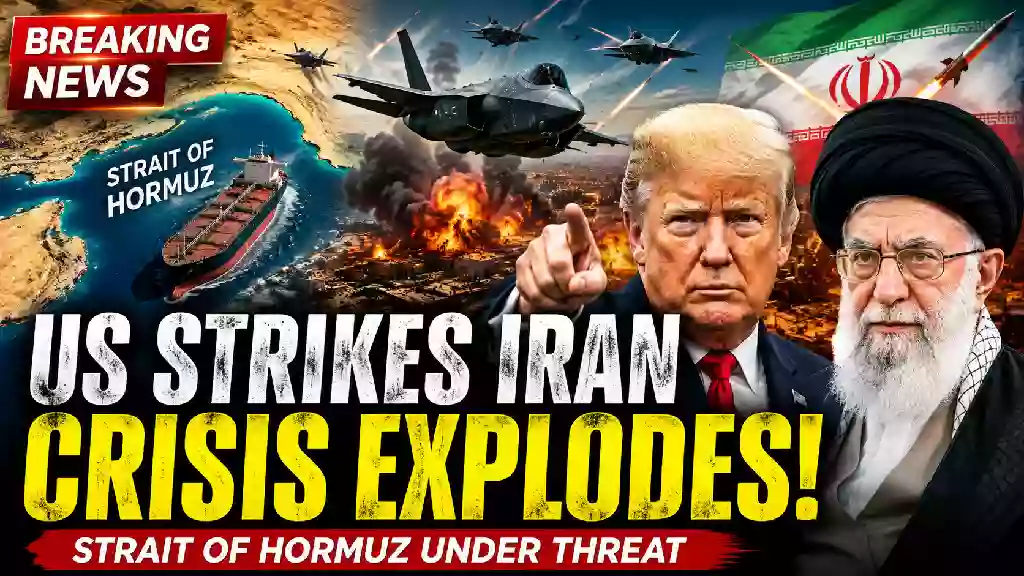
A breaking news graphic depicting escalating U.S.-Iran military tensions, featuring reported U.S. airstrikes, retaliatory threats, and the strategic Strait of Hormuz, a key global oil shipping route.
US and Iran Exchange New Strikes as Strait of Hormuz Tensions Raise Global Security Concerns
Military Escalation Continues Amid Uncertainty Over Diplomatic Talks
Military tensions between the United States and Iran intensified after U.S. forces carried out a second consecutive night of airstrikes against Iranian targets, while Tehran responded with missile and drone attacks on American military facilities across the Gulf region. The latest exchange has heightened concerns over security in the Strait of Hormuz, a critical shipping corridor that plays a vital role in the global energy supply.
According to U.S. Central Command (CENTCOM), approximately 90 targets were struck during the latest round of operations, following about 70 strikes conducted the previous day. The reported targets included port facilities along the Persian Gulf, airports, bridges, and other infrastructure described as supporting Iranian military operations.
Iran Launches Retaliatory Attacks
Following the U.S. operation, Iran reportedly launched missiles and drones targeting U.S. military installations in Kuwait, Bahrain, and Qatar. Officials have released few details regarding damage or casualties, and independent verification of the full extent of the attacks remains limited.
The renewed exchange of military action follows reported attacks on commercial vessels transiting the Strait of Hormuz earlier this week. The narrow waterway connects the Persian Gulf with the Gulf of Oman and serves as one of the world’s most strategically important maritime trade routes, with a substantial share of global oil exports passing through it each day.
Any disruption to shipping in the region has the potential to affect international energy markets, increase transportation costs, and raise concerns about global economic stability.
Trump Says Iran Wants to Resume Negotiations
Speaking aboard Air Force One after returning from a NATO summit, President Donald Trump suggested that Iran remains interested in reaching an agreement despite the ongoing military confrontation.
“They’re a little bit out of control, but they want to make a deal, badly,” Trump said during remarks referenced in the report.
Iranian official Mohammad Bagher Ghalibaf rejected the U.S. position, warning that any further military action would provoke additional retaliation. Negotiations surrounding a reported 14-point memorandum of understanding had reportedly been paused during funeral ceremonies for former Supreme Leader Ayatollah Ali Khamenei.
Strait of Hormuz Remains a Strategic Flashpoint
Security analysts continue to identify the Strait of Hormuz as the central issue in the current confrontation. The passage is essential for global energy transportation, making any threat to maritime navigation a matter of international concern.
Commentators cited in the report argued that elements within Iran’s Islamic Revolutionary Guard Corps (IRGC) continue to influence decisions regarding control of the strategic waterway. They also suggested that recent attacks on commercial shipping may have been intended to increase economic pressure by driving higher global oil prices. Those assessments represent analyst commentary and have not been independently confirmed.
Regional Stability and Global Markets in Focus
The latest military exchanges have prompted renewed debate over how the United States and its allies should respond while avoiding a wider regional conflict. Some analysts believe continued military pressure could deter further attacks on commercial shipping, while others warn that additional escalation may increase the risk of prolonged instability across the Middle East.
Financial markets are also watching developments closely. Any sustained disruption to maritime traffic through the Strait of Hormuz could affect global crude oil supplies, fuel prices, inflation, and international trade.
Outlook Remains Uncertain
Despite the exchange of military strikes and increasingly sharp rhetoric from both Washington and Tehran, it remains unclear whether the latest escalation will lead to broader conflict or renewed diplomatic efforts.
For now, military forces across the region remain on heightened alert as governments monitor developments in one of the world’s most strategically important waterways. With the Strait of Hormuz continuing to serve as a critical artery for global commerce, future actions by both the United States and Iran are likely to have far-reaching geopolitical and economic consequences.
#Iran #UnitedStates #StraitOfHormuz #MiddleEast #BreakingNews #USMilitary #GlobalOil #CENTCOM #PersianGulf #WorldNews