Trump Targets Democratic Socialists as ‘Comrades’ Remark Sparks Political Firestorm

Trump Targets Democratic Socialists as ‘Comrades’ Remark Sparks Political Firestorm
Debate Over Democratic Socialism and Government Programs Takes Center Stage
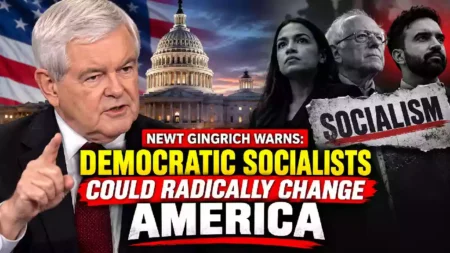
President Donald Trump has renewed his criticism of democratic socialism, arguing that the growing influence of progressive politicians represents a significant ideological challenge for the United States. Speaking during recent public remarks, Trump pointed to the increasing use of the word “comrades” by some progressive activists and candidates, suggesting it reflects a shift toward ideas commonly associated with communist movements.
The comments have intensified debate over the role of government, economic policy, and the future direction of the Democratic Party as political divisions continue to sharpen ahead of upcoming elections.
Trump Raises Concerns About Progressive Rhetoric
Trump’s latest criticism centered on language used by some democratic socialist organizers, who have referred to supporters as “comrades” during campaign events and political gatherings. The president argued that such terminology raises concerns about the ideological direction of parts of the progressive movement.
For Republicans, the issue extends beyond political rhetoric. They contend that democratic socialism promotes greater government control over the economy and could undermine the principles of free-market capitalism that have long defined the United States.
Richard Fowler Says Democratic Socialism Is Different From Communism
Fox News contributor Richard Fowler rejected comparisons between democratic socialism and communism, arguing that the two represent fundamentally different political concepts.
According to Fowler, many proposals supported by progressive Democrats focus on expanding government programs that already exist rather than replacing America’s economic system. He pointed to widely used programs such as Social Security, Medicare, Medicaid, and Meals on Wheels, noting that similar initiatives were once criticized as socialist but are now broadly accepted by the public.
Fowler argued that today’s policy discussions are centered on helping working families manage rising living expenses rather than promoting communist ideology.
Rising Living Costs Drive Policy Debate
The discussion highlighted several economic challenges facing American households, including higher housing costs, expensive healthcare, and the increasing cost of childcare.
Fowler argued that many families struggle to afford these essential expenses, making expanded government assistance an attractive option for some voters. Supporters of these policies believe targeted public investment could help reduce financial pressure on working Americans while strengthening economic stability.
Critics, however, maintain that expanding federal programs would increase government spending and place additional burdens on taxpayers.
Republicans See Growing Influence on the Left
House Speaker Mike Johnson also weighed in on the discussion, suggesting that the Democratic Party’s progressive wing has gained considerable influence within the party.
Johnson argued that many establishment Democrats recognize the movement’s growing power but are reluctant to challenge it because progressive activists generate significant grassroots enthusiasm, campaign donations, and political momentum.
Republicans continue to argue that expanding social programs could weaken economic growth and increase federal spending, while progressive lawmakers believe greater public investment is necessary to address affordability challenges facing many Americans.
Economic Inequality Remains a Major Political Issue
Fowler also pointed to economic inequality as one of the driving forces behind support for progressive policies.
He argued that many Americans believe wealthy corporations, financial institutions, and high-income individuals have benefited from government assistance over the years, while working families have continued to face rising costs without similar support.
According to Fowler, frustration over economic inequality has contributed to growing dissatisfaction with both major political parties and increased public interest in proposals aimed at expanding government assistance.
Debate Extends Beyond Domestic Policy
The conversation also touched on broader political issues after Senator John Fetterman expressed concern about rising anti-Semitism and increasingly divisive political rhetoric.
Fetterman argued that criticism of Israel has, in some instances, evolved into anti-Semitic language. Fowler responded that Americans can criticize the policies of the Israeli government without being anti-Israel or anti-Semitic, emphasizing the importance of separating foreign policy debates from domestic economic discussions.
Democratic Socialism Continues to Divide American Politics
As the political landscape evolves, democratic socialism remains one of the country’s most debated issues.
Supporters argue that expanding government programs can help address rising living costs, healthcare affordability, and economic inequality. Opponents warn that greater government involvement could reshape the nation’s economic system and reduce individual economic freedom.
With both parties presenting sharply different visions for America’s future, the debate over democratic socialism is expected to remain a prominent issue throughout the election cycle.
#DonaldTrump #DemocraticSocialism #USPolitics #BreakingNews #Republicans #Democrats #Communism #PoliticalDebate #Election2026