Trump Signals Iran Ceasefire Has Ended Hints at Tougher US Response
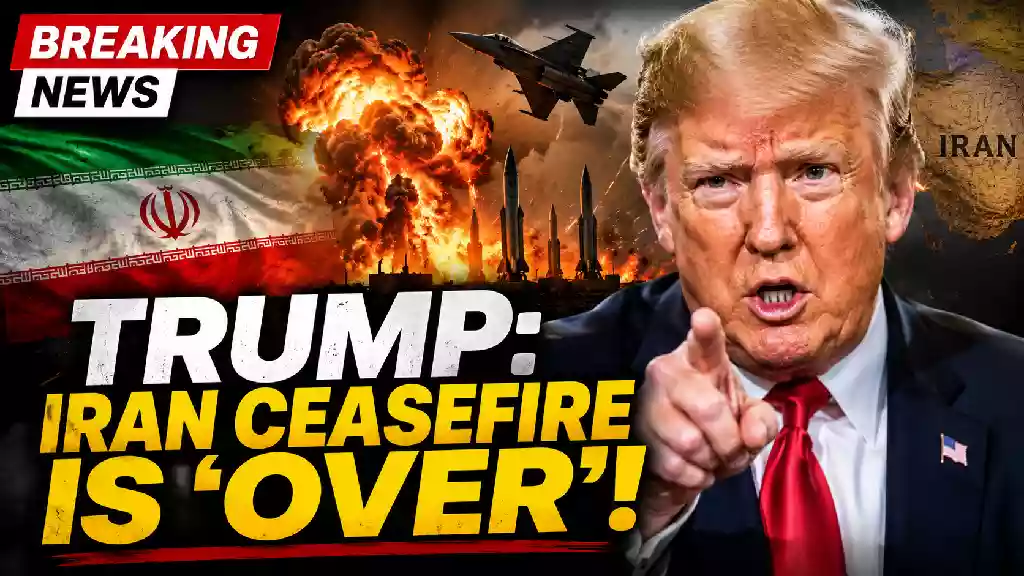
President Donald Trump speaks during heightened Middle East tensions as the U.S. signals a tougher stance toward Iran following his declaration that the Iran ceasefire is "over."
Trump Signals Iran Ceasefire Has Ended Hints at Tougher US Response
President Says Diplomacy Has Stalled as Military Pressure on Iran Could Intensify
President Donald Trump indicated that the ceasefire between the United States and Iran has effectively come to an end, suggesting Washington may be prepared to adopt a more aggressive strategy as tensions continue to rise across the Middle East. Speaking during the NATO summit, Trump expressed frustration with Iran, criticized several U.S. allies, and signaled that military pressure could increase if diplomatic efforts fail to produce results.
Although Trump said negotiators remain free to continue discussions, his remarks suggested that he has little confidence in the current diplomatic process.
Trump Says Ceasefire Is “Over”
When asked whether the ceasefire with Iran was still in effect, Trump responded that he believes it is over, describing the agreement as effectively “dead.” He also delivered sharp criticism of Iran’s leadership, accusing the country of acting in bad faith and expressing skepticism that further negotiations would lead to a breakthrough.
The comments mark one of Trump’s strongest public statements on the conflict since recent U.S. military operations against Iranian targets.
Analysts See Shift Toward Increased Military Pressure
National security and military analyst Dr. Rebecca Grant said Trump’s remarks appear to signal a transition from diplomacy to renewed military pressure.
According to Grant, U.S. Central Command recently conducted strikes against numerous targets in Iran while negotiations have reached a standstill. She noted that American forces remain fully deployed across the region, including aircraft carriers, amphibious assault ships, combat aircraft, and tens of thousands of service members capable of responding quickly if additional operations are authorized.
Grant said the continued U.S. military presence demonstrates that commanders remain prepared should the administration decide further action is necessary.
Strait of Hormuz Remains a Key Security Concern
One of the primary concerns raised during the discussion was the security of the Strait of Hormuz, one of the world’s busiest maritime trade routes.
Grant argued that preventing attacks on commercial shipping remains a major U.S. objective and suggested Washington may continue applying military pressure if Iran threatens regional stability or international commerce.
The strategic waterway carries a significant share of the world’s energy exports, making its security a priority for global markets.
Trump Criticizes NATO Allies
In addition to Iran, Trump voiced frustration with several NATO partners during his remarks.
He criticized Spain over defense spending and questioned the country’s level of support for U.S. security initiatives, even suggesting he wanted to explore trade measures against the country. Despite those comments, analysts note that Spain continues to host important U.S. naval facilities that support operations throughout Europe and the Middle East.
Trump also renewed his focus on Greenland, describing the Arctic territory as strategically important because of its role in missile defense, space operations, and access to critical mineral resources.
Syria Meeting May Shape Regional Strategy
Trump is also scheduled to meet with Syria’s new leadership during the NATO summit.
According to Grant, the administration appears interested in strengthening ties with Syria’s current government as part of a broader effort to reduce Iranian influence in the region. Discussions are expected to include sanctions relief, economic cooperation, and regional security.
Observers will be watching closely for any policy announcements following the meeting.
Turkey’s Possible Return to the F-35 Program
Another issue discussed during the summit was Turkey’s potential return to the F-35 fighter jet program.
The possibility follows reports that sanctions on Turkey could be eased despite concerns surrounding its previous acquisition of the Russian S-400 air defense system.
Grant argued that the security risks can be managed and said Turkey remains an important NATO ally whose participation would strengthen the alliance’s southern flank. However, any move to restore Turkey’s role in the program is likely to face continued scrutiny from lawmakers in both political parties.
What Comes Next?
Trump’s latest remarks suggest that U.S. policy toward Iran may be entering a more confrontational stage.
While diplomatic channels remain open, the president’s comments, combined with the continued deployment of U.S. military assets throughout the region, indicate that Washington is prepared to increase pressure if negotiations remain stalled.
As the NATO summit continues and Trump holds additional meetings with international leaders, further developments could influence the next phase of U.S. foreign policy in the Middle East and beyond. International observers will be closely monitoring whether the administration pursues renewed diplomacy, expanded sanctions, or additional military operations in response to Iran’s actions.
#DonaldTrump #Iran #MiddleEast #BreakingNews #NATO #USIran #ForeignPolicy #WorldNews #Geopolitics #CENTCOM