Netanyahu Voices Security Concerns Ahead of Trump’s Turkey Talks
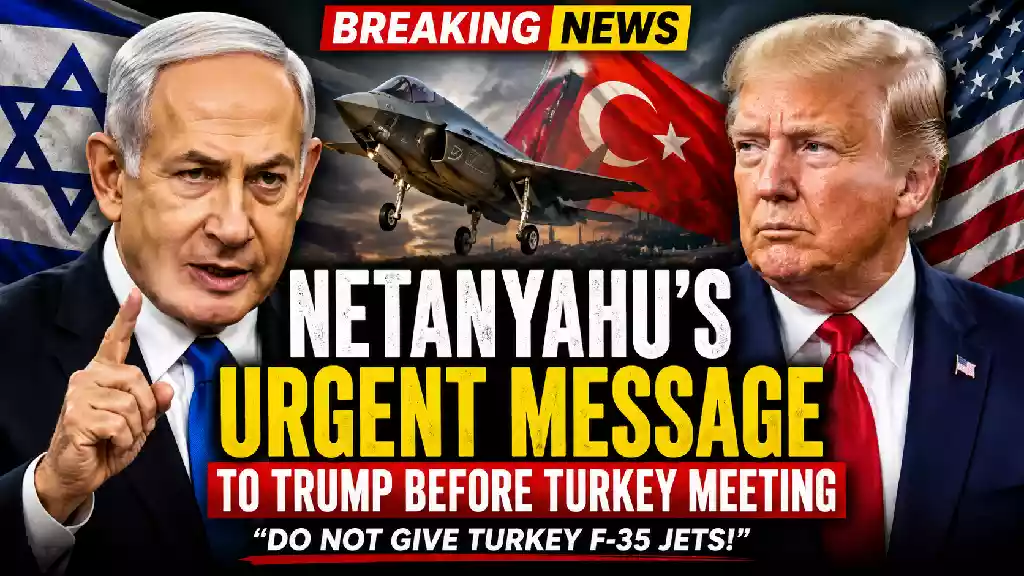
Netanyahu Voices Security Concerns Ahead of Trump’s Turkey Talks
Israeli Leader Warns Against Advanced Arms Sales to Turkey While Highlighting Iran Threat and Regional Stability
Israeli Prime Minister Benjamin Netanyahu has urged the United States to carefully consider its military relationship with Turkey, warning that supplying advanced fighter aircraft to Ankara could destabilize the Middle East and threaten Israel’s security interests.
Speaking during a televised interview, Netanyahu discussed a range of regional issues, including Iran’s nuclear ambitions, the U.S.-Israel alliance, and Turkey’s role in the region ahead of President Donald Trump’s expected diplomatic engagement involving Ankara.
The Israeli leader emphasized that while Israel values strong alliances, regional security must remain the priority when considering military cooperation with countries whose policies could alter the balance of power.
Netanyahu Reiterates Warning Over Iran
A major focus of the interview was Iran, which Netanyahu described as Israel’s most significant security challenge.
He argued that Iran’s leadership continues to promote hostility toward both Israel and the United States while pursuing military capabilities that could threaten regional stability. Netanyahu also claimed that many Iranian citizens oppose the country’s current leadership but remain under strict government control.
According to Netanyahu, preventing Iran from acquiring nuclear weapons and advanced missile technology remains one of Israel’s highest national security priorities.
He maintained that Israel’s recent military actions were carried out in response to what it views as ongoing threats posed by Iran and its regional allies.
U.S.-Israel Alliance Remains Strong
Despite occasional policy differences, Netanyahu described the relationship between Israel and President Trump as solid and productive.
He acknowledged that close allies sometimes disagree but said both governments continue to cooperate on issues affecting regional security and stability.
Netanyahu praised the United States for its long-standing support of Israel and congratulated America as it marks its 250th anniversary, describing the country as a leading defender of democracy and freedom.
The prime minister said the partnership between Washington and Jerusalem continues to play a critical role in addressing shared security challenges across the Middle East.
Concerns Over Turkey’s Military Capabilities
Netanyahu devoted significant attention to Turkey, expressing concern over the possibility of advanced American military technology being transferred to the country.
He argued that providing Turkey with F-35 fighter jets or sophisticated aircraft engines could shift the strategic balance in the region.
Netanyahu also criticized Turkish leadership over its rhetoric toward Israel and alleged support for Hamas, claims that Turkey has consistently rejected. Ankara has maintained that its contacts with Hamas are political in nature and has denied accusations that it provides support for terrorism.
The Israeli leader said any decision involving advanced military equipment should consider its long-term impact on regional security and America’s strategic interests.
Opportunities for Regional Peace
While addressing ongoing security concerns, Netanyahu also expressed optimism about expanding diplomatic relations between Israel and other Middle Eastern nations.
He pointed to the Abraham Accords as an example of successful diplomacy that reshaped regional cooperation and suggested that recent geopolitical developments could create opportunities for additional normalization agreements.
According to Netanyahu, weakening the influence of Iran-backed groups could encourage broader cooperation among countries seeking greater stability and economic development.
Security Challenges Continue Across the Region
Netanyahu also discussed the roles of Hezbollah and Hamas, describing both organizations as major security threats backed by Iran.
He argued that confronting militant groups remains essential to protecting civilians and preserving long-term regional stability.
The prime minister stressed that cooperation between democratic allies would remain vital as governments address terrorism, missile proliferation, and other evolving security risks.
As Washington continues its diplomatic efforts in the Middle East, Netanyahu’s remarks underscore the complex decisions facing policymakers as they balance alliances, defense cooperation, and regional security. The coming discussions involving Turkey are expected to draw close attention from governments across the region, particularly as broader geopolitical tensions continue to shape U.S. foreign policy.
#BenjaminNetanyahu #DonaldTrump #Israel #Turkey #Iran #MiddleEast #BreakingNews #Geopolitics #ForeignPolicy #F35