Alleged Iranian Assassination Plot Against Trump Raises New Security Concerns Amid Middle East Tensions
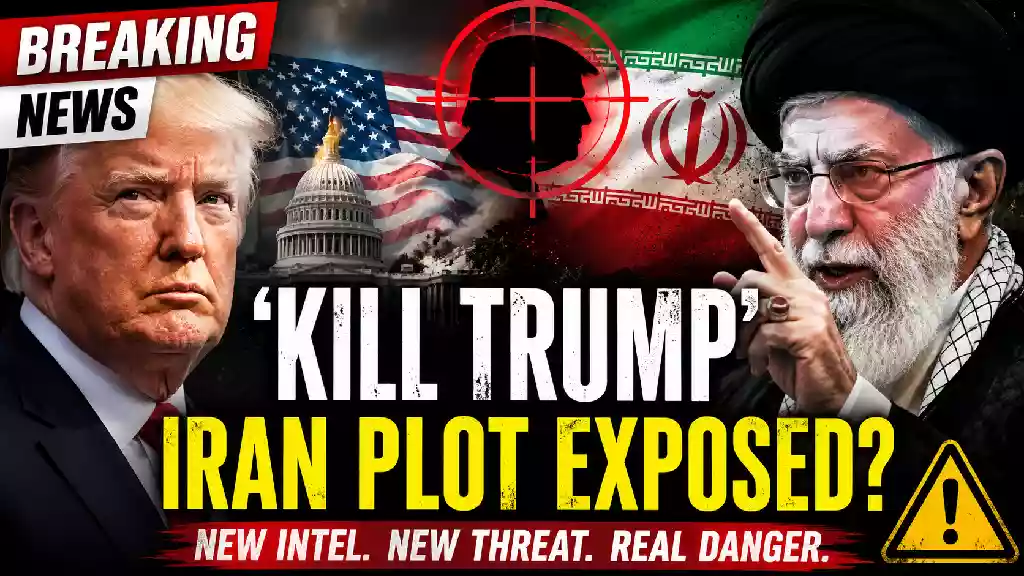
A YouTube thumbnail illustrating reports of an alleged Iranian threat targeting President Donald Trump, highlighting escalating U.S.-Iran tensions, regional security concerns, and ongoing diplomatic efforts.
Alleged Iranian Assassination Plot Against Trump Raises New Security Concerns Amid Middle East Tensions
Reported Israeli Intelligence Fuels Fresh Questions Over US-Iran Relations
Tensions between the United States and Iran have intensified following reports of an alleged Iranian assassination plot targeting President Donald Trump. According to reporting discussed in the uploaded transcript, Israeli intelligence reportedly shared new information with U.S. officials suggesting Iran may be pursuing another plan to assassinate the former president, adding another layer of concern to an already volatile situation in the Middle East.
The reported intelligence comes at a time when Washington continues diplomatic efforts with Tehran despite recent military exchanges and escalating rhetoric between the two longtime adversaries. While U.S. officials have not publicly confirmed specific operational details, the allegations have renewed debate over Iran’s longstanding threats against Trump and the future of U.S. policy in the region.
Israel Reportedly Warns U.S. of New Threat
According to the report, Israeli intelligence provided the United States with information indicating what officials described as a fresh Iranian assassination plot targeting President Trump. The report was first highlighted by The Wall Street Journal, citing Israeli intelligence sources.
Iran has repeatedly vowed retaliation following the 2020 U.S. drone strike that killed Iranian General Qassem Soleimani during the Trump administration. Since then, American intelligence and security agencies have publicly acknowledged that threats against Trump remain a significant security concern.
The latest allegations emerge as Israel and the United States continue coordinating on regional security while maintaining differing views on how aggressively to confront Tehran.
Threats Surface During Public Mourning Events
The report also noted that during public ceremonies honoring Iran’s Supreme Leader, some demonstrators displayed banners threatening President Trump and calling for revenge.
Although such public demonstrations do not necessarily represent official Iranian government policy, they reflect the continued hostility among hardline factions toward the former president.
Speaking during a recent overseas trip, Trump acknowledged that he remains a high-profile target.
“I’m number one on the kill list for Iran,” Trump said while discussing the risks associated with serving as president.
His remarks underscored the extraordinary security measures surrounding current and former U.S. presidents facing credible foreign threats.
Diplomatic Efforts Continue Despite Escalating Rhetoric
Despite heightened tensions, U.S. officials say diplomatic engagement with Iran remains ongoing.
American leaders continue pursuing negotiations aimed at limiting Iran’s nuclear program while seeking greater regional stability. However, recent military exchanges and increasingly hostile public statements have complicated those efforts.
Officials have also emphasized maintaining freedom of navigation through the Strait of Hormuz, one of the world’s most strategically important shipping lanes. Commercial traffic has reportedly slowed amid growing regional uncertainty, although U.S. naval forces continue assisting vessels traveling through the area.
Former Trump Adviser Says Pressure Must Continue
Former National Security Council Chief of Staff Alex Gray argued that the reported threats reinforce the need for continued pressure on Iran.
Gray credited President Trump’s previous counterterrorism operations for eliminating several high-profile extremist leaders and suggested those actions made Trump a continuing target for retaliation.
He also argued that maintaining military deterrence remains essential while diplomatic discussions continue.
According to Gray, the administration’s objective remains preventing Iran from advancing its nuclear capabilities while encouraging greater stability across the Middle East.
Military Options Remain Part of U.S. Strategy
During the interview, Gray suggested that no military options should be ruled out if Iran refuses to change its behavior.
He argued that maintaining strategic uncertainty serves as an effective deterrent against hostile actions by Tehran.
Meanwhile, the continued presence of U.S. naval forces—including multiple warships and carrier strike groups operating in the region—signals Washington’s commitment to protecting American interests and international shipping routes.
Security analysts note that the military buildup also sends a message that the United States is prepared to respond if regional tensions escalate further.
Middle East Stability Remains Fragile
The reported assassination threat highlights the fragile state of U.S.-Iran relations as diplomatic negotiations continue alongside military posturing.
Although officials continue seeking a negotiated resolution to Iran’s nuclear ambitions, repeated threats, intelligence reports, and regional military deployments illustrate how quickly tensions could intensify.
For now, American security agencies remain vigilant while policymakers attempt to balance diplomacy with deterrence. Whether negotiations ultimately succeed or regional tensions continue rising may shape U.S. foreign policy and Middle East security for months to come.
#DonaldTrump #Iran #MiddleEast #BreakingNews #NationalSecurity #USPolitics #Israel #ForeignPolicy #Geopolitics #Trump