Danbury Opens Police Jobs to DACA Recipients and Legal Residents Sparking Fierce Public Safety Debate
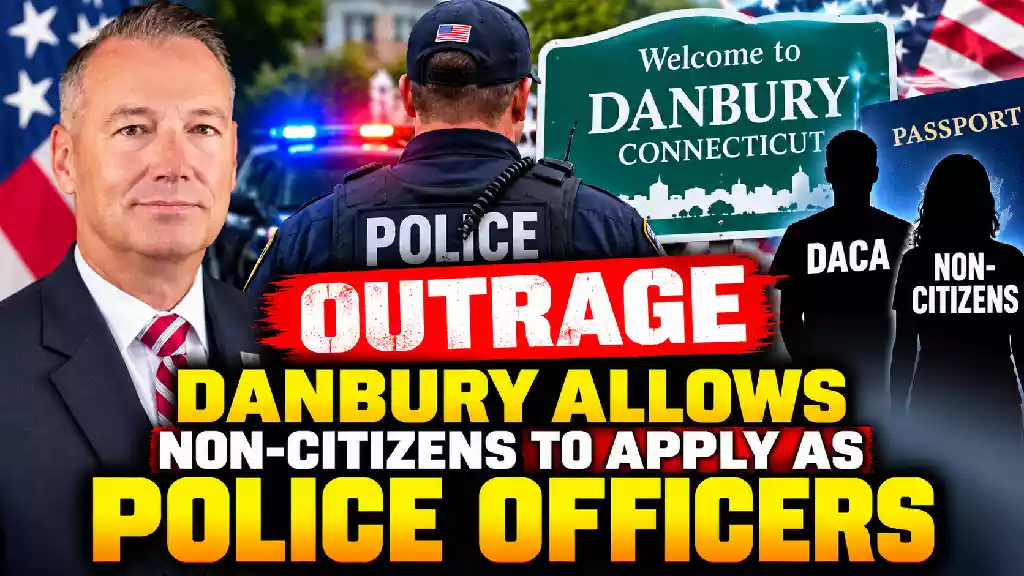
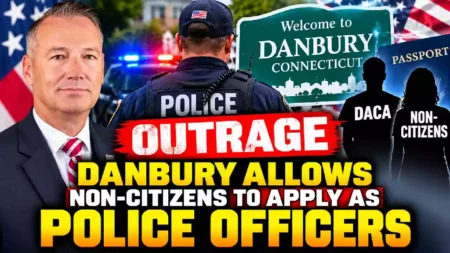
Danbury, Connecticut, faces a heated public safety debate after the city expanded police applicant eligibility to include qualified permanent residents and DACA recipients.
Danbury Opens Police Jobs to DACA Recipients and Legal Residents Sparking Fierce Public Safety Debate
Danbury Police Hiring Rule Sparks Outrage Over DACA and Non-Citizen Applicants
A controversial change to police hiring rules in Danbury, Connecticut, is drawing intense criticism after the City Council voted to allow lawful permanent residents and recipients of Deferred Action for Childhood Arrivals (DACA) to apply to become police officers.
The City Council approved the ordinance change by an 18–2 vote, opening the department’s applicant pool to people who are legally permitted to live and work in the United States but are not U.S. citizens. The decision came shortly after high-profile Immigration and Customs Enforcement (ICE) operations in the Danbury area, adding fuel to an already heated debate over immigration and law enforcement.
Danbury Council’s Decision Sparks Backlash
The policy has triggered criticism from council member Candace Fay, who voted against the change and questioned whether expanding police eligibility was necessary.
The source material describes Fay as arguing that the decision was not driven by an identifiable public-safety need and instead represented a political move that could further divide the city.
Her concerns come at a politically sensitive moment for Danbury, where immigration enforcement has become a major local issue following recent federal operations.
Critics say the debate is about more than employment eligibility. They argue that police officers exercise extraordinary authority, including the ability to make arrests and enforce laws, making the standards for who can wear a badge a matter of public trust.
Police Chief Says Standards Remain the Same
Danbury Police Chief Patrick Ridenhour has defended the policy by emphasizing that changing the citizenship requirement does not mean lowering the department’s hiring standards.
Connecticut’s Police Officer Standards and Training Council (POSTC) removed the citizenship requirement for qualified permanent residents in 2020 and expanded eligibility to DACA recipients in 2025. Danbury’s ordinance change brings the city into alignment with those state-level eligibility rules.
The chief also stated that every applicant must still complete the department’s rigorous selection process, including background screening and other requirements. The department has said that many applicants do not make it through the initial stages of recruitment.
Mayor Roberto Alves has likewise defended the change, arguing that qualified residents who already live in Danbury should have the opportunity to serve the community.
Debate Intensifies After ICE Operations
The timing of the vote has become one of the most controversial aspects of the story.
The council acted shortly after ICE conducted enforcement operations in Danbury and other Connecticut communities. Local officials and immigrant advocates have described the operations as deeply concerning, while federal officials have defended immigration enforcement efforts.
The close timing has led critics to question whether the ordinance was intended to send a broader political message about Danbury’s approach to immigration.
Supporters, however, say the city is simply removing what they consider an unnecessary barrier for qualified applicants and aligning local hiring rules with Connecticut’s existing police eligibility standards.
Former ICE Official Raises Concerns
Former acting ICE Director Todd Lyons has sharply criticized the policy.
Lyons argued that expanding police eligibility to non-citizens and DACA recipients could create challenges involving immigration enforcement, recruitment and public safety. He also questioned how background investigations would work when local policies restrict cooperation between municipal authorities and federal immigration agencies.
He further warned that the change could potentially affect police staffing, morale, salaries and recruitment, although those potential consequences remain matters of debate rather than established outcomes.
Background Checks Become a Key Flashpoint
One of the central issues is whether applicants will receive the same level of scrutiny as other police recruits.
Danbury officials have emphasized that applicants must meet the same qualifications and undergo the same hiring process. The city ordinance itself continues to impose requirements concerning education, age, physical fitness, criminal history and other qualifications.
Critics remain concerned about whether local background investigations can fully account for information held by federal immigration authorities.
That disagreement places the spotlight on an important question: Does removing a citizenship requirement strengthen police recruitment by expanding the pool of qualified candidates, or does it create additional concerns about accountability and public confidence?
A National Debate Playing Out in Danbury
Danbury’s decision reflects a broader national argument over immigration, police recruitment and the role of local law enforcement.
Supporters say permanent residents and DACA recipients who meet rigorous hiring requirements should be allowed to compete for police positions, particularly when state rules already permit them to do so. Critics argue that citizenship should remain a fundamental requirement for those entrusted with law enforcement authority.
For now, Danbury has chosen to expand eligibility.
Whether the decision ultimately improves recruitment and representation within the police department — or produces the concerns raised by its opponents — will depend on how the policy operates in practice.
What is already clear is that the 18–2 vote has placed Danbury at the center of a fierce national debate over immigration, police hiring, public safety and who should be entrusted with a badge.
#Danbury #Connecticut #DanburyPolice #PoliceHiring #DACA #Immigration #ICE #LawEnforcement #PublicSafety #PoliceRecruitment #ConnecticutPolitics #DanburyCityCouncil